


Police bust cybercrime racket operating from shop in Palghar district, two held

Tracking the bank accounts where the money had been transferred, the police reached a shop near Vasai railway station in Palghar district, said senior inspector Deepali Patil of the Evidence Management Centre of the Navi Mumbai police

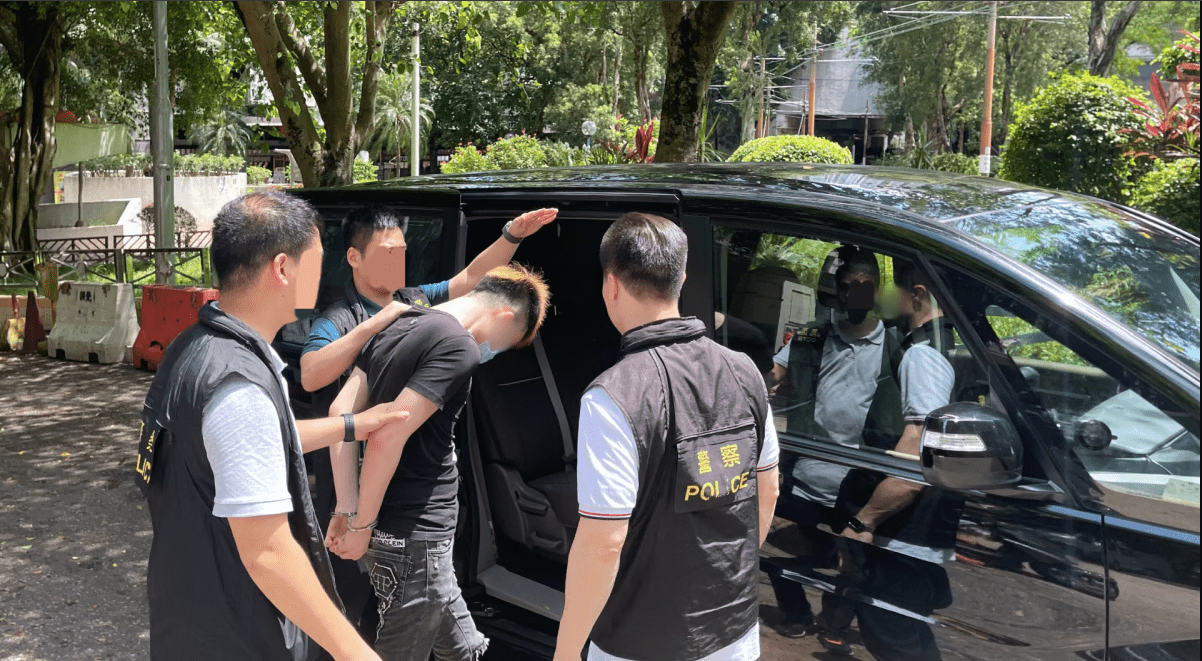
The Navi Mumbai police have arrested two persons who were running a cybercrime racket from a shop in Palghar district, an official said on Saturday.

The Nhava Sheva police recently registered a case after a man approached them claiming that a woman he had met on a dating app duped him of over Rs 10 lakh promising attractive returns on investment.

Tracking the bank accounts where the money had been transferred, the police reached a shop near Vasai railway station in Palghar district, said senior inspector Deepali Patil of the Evidence Management Centre of the Navi Mumbai police.

Nine youngsters were working in the shop rented by two men, identified as Yogesh Jain and Himanshu Jain, the official said. Police recovered over 50 debit cards, 18 mobile phones, 17 chequebooks, 15 SIM cards, 8 Aadhaar cards and many other documents from the duo, the official said.

Police said Yogesh and Himanshu had recruited the youths from Rajasthan and Uttar Pradesh and opened several bank accounts in their names using fake documents like rent agreements. The duo used the youngsters to commit cybercrimes, the official said.

Yogesh and Himanshu have been arrested, the official said, adding that a probe is underway.
read more

Massive illegal online gambling crackdown: Interpol coordinates 5,100 arrests in 28 countries

Interpol has busted thousands of illicit football betting websites, scam centers, human trafficking, fraud schemes, and other criminal activities in a massive operation, which led to over 5,100 arrests and the recovery of more than $59 million in unlawful proceeds.

The operation, code-named SOGA X, spanned 28 countries and territories between June and July 2024 during the UEFA 2024 European Football Championships.

The feds correctly predicted the tournament would catalyze a surge in illegal online football gambling, generating betting turnover and lucrative profits for criminals.

55 suspects were arrested in Macao (China)

SOGA X investigations also led to the shutting down of tens of thousands of illegal websites, the rescue of trafficked workers, and the exposure of money laundering syndicates, Interpol announced.

“Organized crime networks reap huge profits from illegal gambling, which is often intertwined with corruption, human trafficking, and money laundering. The successes of Operation SOGA X would not have been achieved without global information sharing and significant efforts by law enforcement authorities on the ground,” said Stephen Kavanagh, Interpol Executive Director of Police Services.

interpol-operation

In the Philippines, the operation dismantled a scam center operating alongside a licensed gambling site. Local authorities, supported by Interpol, rescued more than 650 human trafficking victims, 400 Filipinos, and more than 250 foreign nationals from six different countries among them.

The people were forced into working for legal gambling sites and running illegal cyber scams, such as romance scams and crypto-related frauds.

interpol-operation2

“Many of the victims had been lured to the location with false promises of employment and were kept there through threats, intimidation, and even passport confiscation,” Interpol said.

Another large bust was a large-scale financial fraud and illegal betting sites scheme in Vietnam and Thailand.

operation tackled illicit gambling

In Vietnam, where online gambling is prohibited for citizens, the feds locked up a sophisticated gambling ring that was generating $800,000 in daily transactions. Meanwhile, in Thailand, police seized assets worth over $9 million after raiding two locations hosting major illegal betting websites.

Another part of the operation took place in Europe. Greek authorities took down an illegal betting ring behind at least seven illegal gambling sites, which also had access to accounts on 60 other illegal websites. The criminals exploited fake and mule user accounts to place bets on sports events. Interpol noted that the ring employed VPNs to bypass internet blocks in Greece.

Seizures during operation SOGA X
Seizures in Philippines

The criminal group managed 3,000 fake and ‘mule’ accounts on legal gambling websites, which had been created using stolen identity cards or forged documents. Police seized laptops, containing at least 9,000 pictures of fake IDs.

interpol-support-in-philippines

Interpol suspects that criminals tried to break down large sums of money into smaller, less detectable chunks by dispersing profits across multiple accounts. This method of money laundering helps avoid detection.

Ringleaders arrested during SOGA X
The ringleaders arrested in Thailand

Illegal online gambling is closely linked to other crimes and match-fixing as criminals try to manipulate the outcomes of sports events to guarantee profits, Interpol noted.

read more

Feds unmask duo running one of the most prolific hacker gangs

The Department of Justice has charged and arrested two Sudanese brothers with operating Anonymous Sudan, a hacker group known for destructive website takedowns.

Why it matters: The indictment, unsealed Wednesday, paints the clearest picture of who was running the mysterious Anonymous Sudan hacking group — which has launched more than 35,000 attacks in the last year against hospitals, government offices and other major organizations.

Driving the news: A grand jury indicted Ahmed Salah Yousif Omer and Alaa Salah Yusuuf Omer with a count of conspiracy to damage protected computers.

  • Ahmed Omer was also charged with three counts of damaging protected computers.
  • The FBI and the U.S. Attorney’s Office for the Central District of California seized Anonymous Sudan’s hacking tool, according to a press release.
  • The Washington Post reported that officials arrested the duo abroad in March.

Threat level: Anonymous Sudan’s attacks have caused more than $10 million in damage to U.S. organizations, according to federal officials.

  • Anonymous Sudan’s victim list spans sectors and includes several high-profile names: Cloudflare, Microsoft, OpenAI and even the FBI itself.
  • Cedars-Sinai Medical Center in Los Angeles had to redirect emergency room patients to other hospitals for treatment.

The big picture: Anonymous Sudan has been a mystery to security researchers for a little more than a year.

  • The group is mostly politically motivated, unlike other cybercriminal groups where money is the prime motivator.
  • But the group has been far more prolific than the typical political hacking group. At times, security researchers had even assumed the group was a front for pro-Russia political hackers.
  • However, officials told the Post they don’t believe a third party, including a government, was financing or supporting the group’s work.

What they’re saying: “What’s unusual is the predominance of the ideological motive, with financial sprinkled in,” Martin Estrada, U.S. attorney for the Los Angeles region, told the Post.

How it works: Anonymous Sudan targeted victims in distributed denial-of-service attacks — where hackers overload internet-enabled devices with bot traffic until they’re inaccessible.

  • While suffering a website outage might not sound too bad, the repercussions can be huge. Customers may not be able to make payments online and corporations may not be able to access cloud servers.
  • Anonymous Sudan would demand victims pay a ransom to make the attack end, according to court filings.
  • Some of these victims sustained millions of dollars in losses from these attacks, according to a criminal complaint unsealed Wednesday.

Between the lines: Anonymous Sudan was also selling its tool to other hacking groups looking to launch their own large-scale DDoS attacks, according to the complaint.

  • More than 100 users have used the tool — known as Godzilla Botnet, Skynet Botnet and InfraShutdown — to deploy their own DDoS attacks, per federal officials.
  • This is also unusual: Building and selling hacker tools is more common in the cybercrime world and rarely seen in the political hacking space.

Zoom in: The private sector played a prominent role in helping the FBI identify the people running this group.

  • PayPal’s own internal investigation after its attack uncovered certain accounts tied to Anonymous Sudan, according to the complaint.
  • Those accounts then helped the FBI identify potential email addresses linked to Ahmed Omer, specifically, according to the affidavit.

What’s next: If convicted, Ahmed Omer could face a maximum sentence of life in prison, while Alaa Omer could face a maximum of five years.

read more
Trustpilot
The rating of livingsafeonline.com at Trustprofile Reviews is 9.1/10 based on 13 reviews.
Verified by MonsterInsights