
Gophish Framework Used in Phishing Campaigns to Deploy Remote Access Trojans

î „Ravie Lakshmanan

Russian-speaking users have become the target of a new phishing campaign that leverages an open-source phishing toolkit called Gophish Framework to deliver DarkCrystal RAT (aka DCRat) and a previously undocumented remote access trojan dubbed PowerRAT.

“The campaign involves modular infection chains that are either Maldoc or HTML-based infections and require the victim’s intervention to trigger the infection chain,” Cisco Talos researcher Chetan Raghuprasad said in a Tuesday analysis.

The targeting of Russian-speaking users is an assessment derived from the language used in the phishing emails, the lure content in the malicious documents, links masquerade as Yandex Disk (“disk-yandex[.]ru”), and HTML web pages disguised as VK, a social network predominantly used in the country.

Gophish refers to an open-source phishing framework that allows organizations to test their phishing defenses by leveraging easy-to-use templates and launch email-based campaigns that can then be tracked in near real-time.

The unknown threat actor behind the campaign has been observed taking advantage of the toolkit to send phishing messages to their targets and ultimately push DCRat or PowerRAT depending on the initial access vector used: A malicious Microsoft Word document or an HTML embedding JavaScript.

When the victim opens the maldoc and enables macros, a rogue Visual Basic (VB) macro is executed to extract an HTML application (HTA) file (“UserCache.ini.hta”) and a PowerShell loader (“UserCache.ini”).

The macro is responsible for configuring a Windows Registry key such that the HTA file is automatically launched every time a user logs into their account on the device.

The HTA file, for its part, drops a JavaScript file (“UserCacheHelper.lnk.js”) that’s responsible for executing the PowerShell Loader. The JavaScript is executed using a legitimate Windows binary named “cscript.exe.”

“The PowerShell loader script masquerading as the INI file contains base64 encoded data blob of the payload PowerRAT, which decodes and executes in the victim’s machine memory,” Raghuprasad said.

The malware, in addition to performing system reconnaissance, collects the drive serial number and connects to remote servers located in Russia (94.103.85[.]47 or 5.252.176[.]55) to receive further instructions.

“[PowerRAT] has the functionality of executing other PowerShell scripts or commands as directed by the [command-and-control] server, enabling the attack vector for further infections on the victim machine.”

In the event no response is received from the server, PowerRAT comes fitted with a feature that decodes and executes an embedded PowerShell script. None of the analyzed samples thus far have Base64-encoded strings in them, indicating that the malware is under active development.

The alternate infection chain that employs HTML files embedded with malicious JavaScript, in a similar vein, triggers a multi-step process that leads to the deployment of DCRat malware.

“When a victim clicks on the malicious link in the phishing email, a remotely located HTML file containing the malicious JavaScript opens in the victim machine’s browser and simultaneously executes the JavaScript,” Talos noted. “The JavaScript has a Base64-encoded data blob of a 7-Zip archive of a malicious SFX RAR executable.”

Present within the archive file (“vkmessenger.7z”) – which is downloaded via a technique called HTML smuggling – is another password-protected SFX RAR that contains the RAT payload.

It’s worth noting that the exact infection sequence was detailed by Netskope Threat Labs in connection with a campaign that leveraged fake HTML pages impersonating TrueConf and VK Messenger to deliver DCRat. Furthermore, the use of a nested self-extracting archive has been previously observed in campaigns delivering SparkRAT.

“The SFX RAR executable is packaged with the malicious loader or dropper executables, batch file, and a decoy document in some samples,” Raghuprasad said.

“The SFX RAR drops the GOLoader and the decoy document Excel spreadsheet in the victim machine user profile applications temporary folder and runs the GOLoader along with opening the decoy document.”

The Golang-based loader is also designed to retrieve the DCRat binary data stream from a remote location through a hard-coded URL that points to a now-removed GitHub repository and save it as “file.exe” in the desktop folder on the victim’s machine.

DCRat is a modular RAT that can steal sensitive data, capture screenshots and keystrokes, and provide remote control access to the compromised system and facilitate the download and execution of additional files.

“It establishes persistence on the victim machine by creating several Windows tasks to run at different intervals or during the Windows login process,” Talos said. “The RAT communicates to the C2 server through a URL hardcoded in the RAT configuration file […] and exfiltrates the sensitive data collected from the victim machine.”

The development comes as Cofense has warned of phishing campaigns that incorporate malicious content within virtual hard disk (VHD) files as a way to avoid detection by Secure Email Gateways (SEGs) and ultimately distribute Remcos RAT or XWorm.

“The threat actors send emails with .ZIP archive attachments containing virtual hard drive files or embedded links to downloads that contain a virtual hard drive file that can be mounted and browsed through by a victim,” security researcher Kahng An said. “From there, a victim can be misled into running a malicious payload.”


read more

Arrests in international operation targeting cybercriminals in West Africa

Global law enforcement unites with INTERPOL to combat cybercrime

Arrests in international operation targeting cybercriminals in West Africa

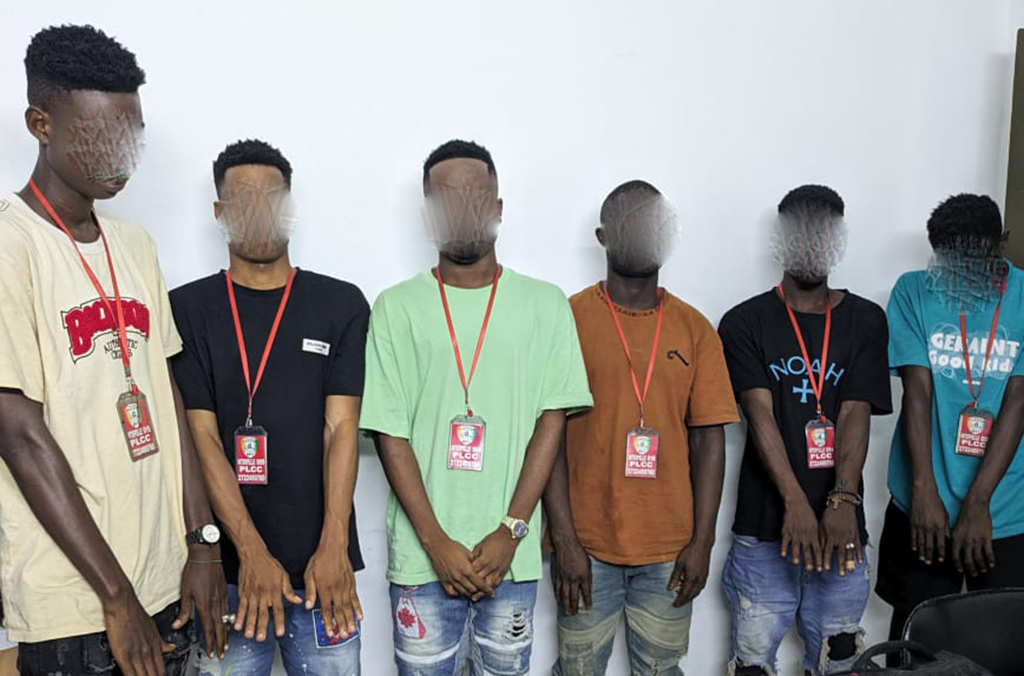
Eight individuals have been arrested as part of an ongoing international crackdown on cybercrime, dealing a major blow to criminal operations in Côte d’Ivoire and Nigeria.

The arrests were made as part of INTERPOL’s Operation Contender 2.0, an initiative aimed at combating cyber-enabled crimes, primarily in West Africa, through enhanced international intelligence sharing.

Phishing scam targets Swiss citizens

In Côte d’Ivoire authorities dismantled a large-scale phishing scam, thanks to a collaborative effort with Swiss police and INTERPOL.

The scam, which resulted in reported financial losses of over USD 1.4 million, involved perpetrators who posed as buyers on small advertising websites. The fraudsters used QR codes to direct victims to fraudulent websites that mimicked a legitimate payment platform where victims would unwittingly enter personal information such as their log in details or card number. They also impersonated the platform’s customer service agents over the phone to further deceive victims.

Swiss authorities received over 260 reports regarding the scam between August 2023 and April 2024, which prompted an investigation that traced the suspects back to Côte d’Ivoire.

With coordination and intelligence from INTERPOL, the Ivorian Cyber Unit led the investigation, locating and arresting the main suspect, who confessed to the offence and to making financial gains of over USD 1.9 million.

The arrest also led to the seizure of digital devices, which are currently undergoing forensic analysis. Five other individuals were found to be conducting cybercriminal activities at the same location, increasing the scope of the operation.

The investigation is still ongoing, with Ivorian investigators working to identify additional victims, recover stolen funds, and trace goods purchased with illicit proceeds.


Arrests in international operation targeting cybercriminals in West Africa

Operation Contender 2.0 combats cybercrime through enhanced intelligence sharing

Arrests in international operation targeting cybercriminals in West Africa

Arrests in Nigeria as part of a crackdown on cybercrime

Arrests in international operation targeting cybercriminals in West Africa

Global law enforcement united with INTERPOL for the operation

Arrests in international operation targeting cybercriminals in West Africa

The arrests led to the seizure of digital devices
4/4

An international campaign against romance cyber fraud

The Contender 2.0 operation is the latest wave of ongoing action coordinated by INTERPOL’s African Joint Operation against Cybercrime (AFJOC). The initiative was launched in 2021 in response to intelligence from authorities and private partners on the activities of cybercriminal syndicates operating within the African region, particularly in West Africa.

The project targets a variety of cyber threats, including business email compromise schemes, a type of phishing attack in which criminals exploit trust to deceive senior executives into transferring funds or divulging sensitive information.

Another key AFJOC objective is romance scams and other financial grooming crimes which often involve cryptocurrencies or other digital assets. Romance scams refer to criminals creating fake online identities to develop romantic or close relationships with their victims, ultimately to manipulate or steal money from them.

In one recent example, authorities in Finland alerted the Nigerian Police Force via INTERPOL that a victim had been scammed out of a substantial amount of money. Leveraging its private sector partners, including Trend Micro and Group-IB, INTERPOL’s AFJOC was able to provide detailed information to the Nigerian authorities. This intelligence was instrumental in guiding investigative efforts, and local police arrested the suspect on 27 April 2024, along with an accomplice. The investigation revealed the offender’s involvement in similar scams and uncovered links to other potential victims.

Neal Jetton, Director of the Cybercrime Directorate said:

“Leveraging the increased reliance on technology in every aspect of our daily lives, cybercriminals are employing a range of techniques to steal data and execute fraudulent activities. These recent successful collaborations, under the umbrella of Operation Contender 2.0, demonstrate the importance of continued international cooperation in combating cybercrime and bringing perpetrators to justice.”

The AFJOC project is funded by the UK’s Foreign, Commonwealth & Development Office.

read more

Microsoft Reveals macOS Vulnerability that Bypasses Privacy Controls in Safari Browser

î „Ravie Lakshmanan

Microsoft Reveals macOS Vulnerability

Microsoft has disclosed details about a now-patched security flaw in Apple’s Transparency, Consent, and Control (TCC) framework in macOS that has likely come under exploitation to get around a user’s privacy preferences and access data.

The shortcoming, codenamed HM Surf by the tech giant, is tracked as CVE-2024-44133. It was addressed by Apple as part of macOS Sequoia 15 by removing the vulnerable code.

HM Surf “involves removing the TCC protection for the Safari browser directory and modifying a configuration file in the said directory to gain access to the user’s data, including browsed pages, the device’s camera, microphone, and location, without the user’s consent,” Jonathan Bar Or of the Microsoft Threat Intelligence team said.

Microsoft said the new protections are limited to Apple’s Safari browser, and that it’s working with other major browser vendors to further explore the benefits of hardening local configuration files.

Microsoft Reveals macOS Vulnerability

HM Surf follows Microsoft’s discovery of Apple macOS flaws like Shrootless, powerdir, Achilles, and Migraine that could enable malicious actors to sidestep security enforcements.

While TCC is a security framework that prevents apps from accessing users’ personal information without their consent, the newly discovered bug could enable attackers to bypass this requirement and gain access to location services, address book, camera, microphone, downloads directory, and others in an unauthorized manner.

The access is governed by a set of entitlements, with Apple’s own apps like Safari having the ability to completely sidestep TCC using the “com.apple.private.tcc.allow” entitlement.

While this allows Safari to freely access sensitive permissions, it also incorporates a new security mechanism called Hardened Runtime that makes it challenging to execute arbitrary code in the context of the web browser.

That said, when users visit a website that requests location or camera access for the first time, Safari prompts for access via a TCC-like popup. These entitlements are stored on a per-website basis within various files located in the “~/Library/Safari” directory.

The HM Surf exploit devised by Microsoft hinges on performing the following steps –

  • Changing the home directory of the current user with the dscl utility, a step that does not require TCC access in macOS Sonoma
  • Modifying the sensitive files (e.g., PerSitePreferences.db) within “~/Library/Safari” under the user’s real home directory
  • Changing the home directory back to the original directory causes Safari to use the modified files
  • Launching Safari to open a web page that takes a snapshot via the device’s camera and grab the location

The attack could be extended further to save an entire camera stream or stealthily capture audio through the Mac’s microphone, Microsoft said. Third-party web browsers don’t suffer from this problem as they do not have the same private entitlements as Apple applications.

Microsoft noted it observed suspicious activity associated with a known macOS adware threat named AdLoad likely exploiting the vulnerability, making it imperative that users take steps to apply the latest updates.

“Since we weren’t able to observe the steps taken leading to the activity, we can’t fully determine if the AdLoad campaign is exploiting the HM surf vulnerability itself,” Bar Or said. “Attackers using a similar method to deploy a prevalent threat raises the importance of having protection against attacks using this technique.”

read more
Trustpilot
The rating of livingsafeonline.com at Trustprofile Reviews is 9.1/10 based on 13 reviews.
Verified by MonsterInsights