
Arrests in international operation targeting cybercriminals in West Africa

Global law enforcement unites with INTERPOL to combat cybercrime

Arrests in international operation targeting cybercriminals in West Africa

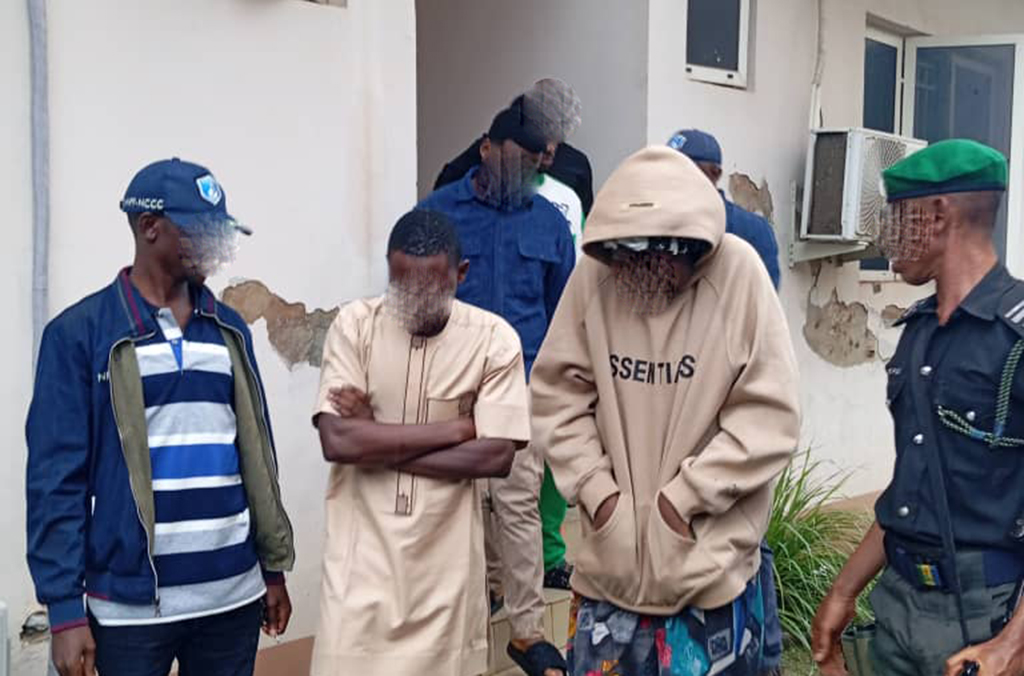
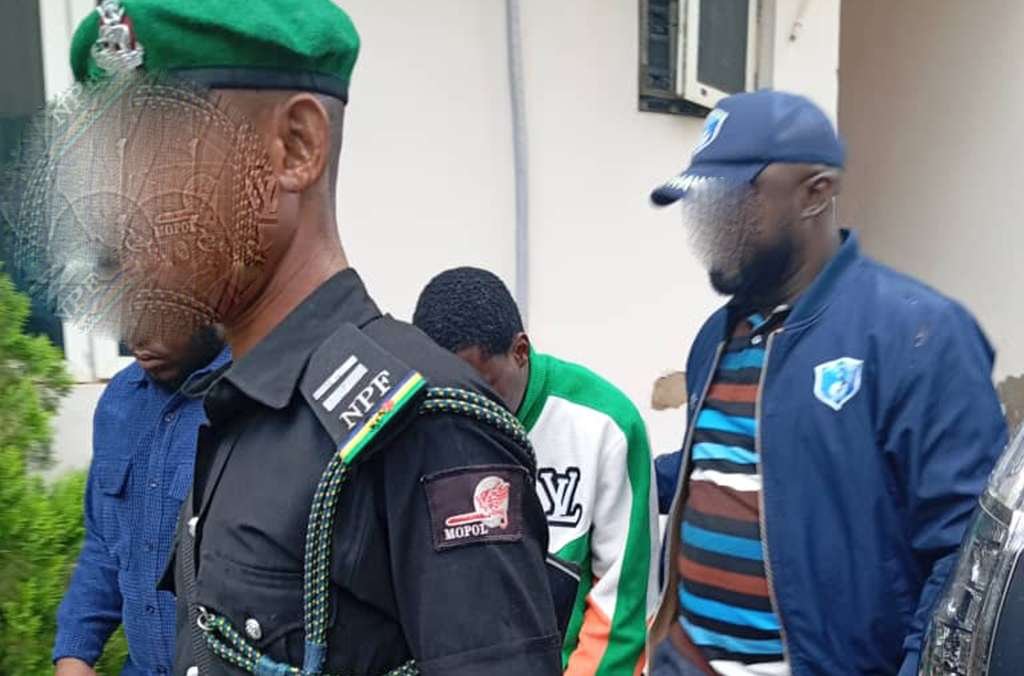
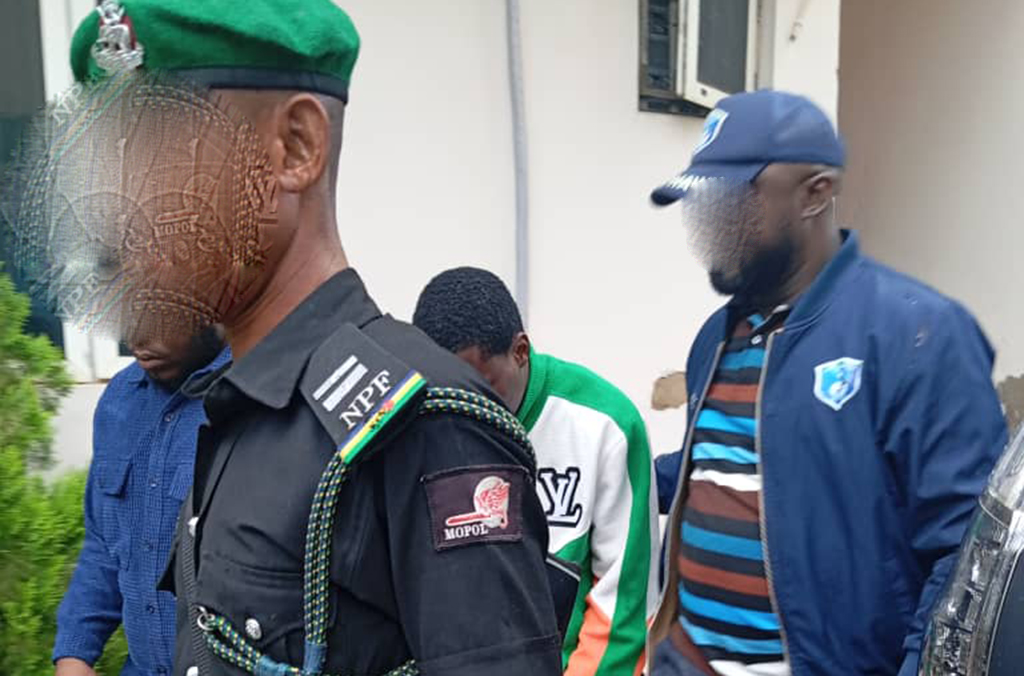
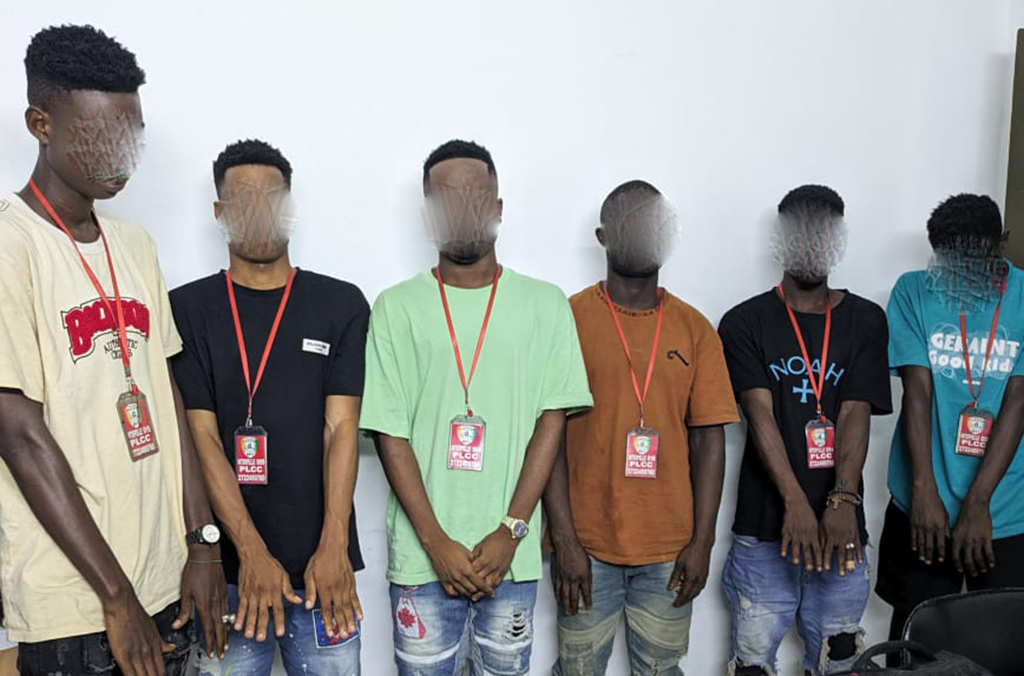
Eight individuals have been arrested as part of an ongoing international crackdown on cybercrime, dealing a major blow to criminal operations in Côte d’Ivoire and Nigeria.

The arrests were made as part of INTERPOL’s Operation Contender 2.0, an initiative aimed at combating cyber-enabled crimes, primarily in West Africa, through enhanced international intelligence sharing.

Phishing scam targets Swiss citizens

In Côte d’Ivoire authorities dismantled a large-scale phishing scam, thanks to a collaborative effort with Swiss police and INTERPOL.

The scam, which resulted in reported financial losses of over USD 1.4 million, involved perpetrators who posed as buyers on small advertising websites. The fraudsters used QR codes to direct victims to fraudulent websites that mimicked a legitimate payment platform where victims would unwittingly enter personal information such as their log in details or card number. They also impersonated the platform’s customer service agents over the phone to further deceive victims.

Swiss authorities received over 260 reports regarding the scam between August 2023 and April 2024, which prompted an investigation that traced the suspects back to Côte d’Ivoire.

With coordination and intelligence from INTERPOL, the Ivorian Cyber Unit led the investigation, locating and arresting the main suspect, who confessed to the offence and to making financial gains of over USD 1.9 million.

The arrest also led to the seizure of digital devices, which are currently undergoing forensic analysis. Five other individuals were found to be conducting cybercriminal activities at the same location, increasing the scope of the operation.

The investigation is still ongoing, with Ivorian investigators working to identify additional victims, recover stolen funds, and trace goods purchased with illicit proceeds.
 

Arrests in international operation targeting cybercriminals in West Africa

Operation Contender 2.0 combats cybercrime through enhanced intelligence sharing

Arrests in international operation targeting cybercriminals in West Africa

Arrests in Nigeria as part of a crackdown on cybercrime

Arrests in international operation targeting cybercriminals in West Africa

Global law enforcement united with INTERPOL for the operation

Arrests in international operation targeting cybercriminals in West Africa

The arrests led to the seizure of digital devices
4/4

An international campaign against romance cyber fraud

The Contender 2.0 operation is the latest wave of ongoing action coordinated by INTERPOL’s African Joint Operation against Cybercrime (AFJOC). The initiative was launched in 2021 in response to intelligence from authorities and private partners on the activities of cybercriminal syndicates operating within the African region, particularly in West Africa.

The project targets a variety of cyber threats, including business email compromise schemes, a type of phishing attack in which criminals exploit trust to deceive senior executives into transferring funds or divulging sensitive information.

Another key AFJOC objective is romance scams and other financial grooming crimes which often involve cryptocurrencies or other digital assets. Romance scams refer to criminals creating fake online identities to develop romantic or close relationships with their victims, ultimately to manipulate or steal money from them.

In one recent example, authorities in Finland alerted the Nigerian Police Force via INTERPOL that a victim had been scammed out of a substantial amount of money. Leveraging its private sector partners, including Trend Micro and Group-IB, INTERPOL’s AFJOC was able to provide detailed information to the Nigerian authorities. This intelligence was instrumental in guiding investigative efforts, and local police arrested the suspect on 27 April 2024, along with an accomplice. The investigation revealed the offender’s involvement in similar scams and uncovered links to other potential victims.

Neal Jetton, Director of the Cybercrime Directorate said:

“Leveraging the increased reliance on technology in every aspect of our daily lives, cybercriminals are employing a range of techniques to steal data and execute fraudulent activities. These recent successful collaborations, under the umbrella of Operation Contender 2.0, demonstrate the importance of continued international cooperation in combating cybercrime and bringing perpetrators to justice.”

The AFJOC project is funded by the UK’s Foreign, Commonwealth & Development Office.

read more

Police bust cybercrime racket operating from shop in Palghar district, two held

Tracking the bank accounts where the money had been transferred, the police reached a shop near Vasai railway station in Palghar district, said senior inspector Deepali Patil of the Evidence Management Centre of the Navi Mumbai police

The Navi Mumbai police have arrested two persons who were running a cybercrime racket from a shop in Palghar district, an official said on Saturday.

The Nhava Sheva police recently registered a case after a man approached them claiming that a woman he had met on a dating app duped him of over Rs 10 lakh promising attractive returns on investment.

Tracking the bank accounts where the money had been transferred, the police reached a shop near Vasai railway station in Palghar district, said senior inspector Deepali Patil of the Evidence Management Centre of the Navi Mumbai police.

Nine youngsters were working in the shop rented by two men, identified as Yogesh Jain and Himanshu Jain, the official said. Police recovered over 50 debit cards, 18 mobile phones, 17 chequebooks, 15 SIM cards, 8 Aadhaar cards and many other documents from the duo, the official said.

Police said Yogesh and Himanshu had recruited the youths from Rajasthan and Uttar Pradesh and opened several bank accounts in their names using fake documents like rent agreements. The duo used the youngsters to commit cybercrimes, the official said.

Yogesh and Himanshu have been arrested, the official said, adding that a probe is underway.

read more

Feds unmask duo running one of the most prolific hacker gangs

The Department of Justice has charged and arrested two Sudanese brothers with operating Anonymous Sudan, a hacker group known for destructive website takedowns.

Why it matters: The indictment, unsealed Wednesday, paints the clearest picture of who was running the mysterious Anonymous Sudan hacking group — which has launched more than 35,000 attacks in the last year against hospitals, government offices and other major organizations.

Driving the news: A grand jury indicted Ahmed Salah Yousif Omer and Alaa Salah Yusuuf Omer with a count of conspiracy to damage protected computers.

  • Ahmed Omer was also charged with three counts of damaging protected computers.
  • The FBI and the U.S. Attorney’s Office for the Central District of California seized Anonymous Sudan’s hacking tool, according to a press release.
  • The Washington Post reported that officials arrested the duo abroad in March.

Threat level: Anonymous Sudan’s attacks have caused more than $10 million in damage to U.S. organizations, according to federal officials.

  • Anonymous Sudan’s victim list spans sectors and includes several high-profile names: Cloudflare, Microsoft, OpenAI and even the FBI itself.
  • Cedars-Sinai Medical Center in Los Angeles had to redirect emergency room patients to other hospitals for treatment.

The big picture: Anonymous Sudan has been a mystery to security researchers for a little more than a year.

  • The group is mostly politically motivated, unlike other cybercriminal groups where money is the prime motivator.
  • But the group has been far more prolific than the typical political hacking group. At times, security researchers had even assumed the group was a front for pro-Russia political hackers.
  • However, officials told the Post they don’t believe a third party, including a government, was financing or supporting the group’s work.

What they’re saying: “What’s unusual is the predominance of the ideological motive, with financial sprinkled in,” Martin Estrada, U.S. attorney for the Los Angeles region, told the Post.

How it works: Anonymous Sudan targeted victims in distributed denial-of-service attacks — where hackers overload internet-enabled devices with bot traffic until they’re inaccessible.

  • While suffering a website outage might not sound too bad, the repercussions can be huge. Customers may not be able to make payments online and corporations may not be able to access cloud servers.
  • Anonymous Sudan would demand victims pay a ransom to make the attack end, according to court filings.
  • Some of these victims sustained millions of dollars in losses from these attacks, according to a criminal complaint unsealed Wednesday.

Between the lines: Anonymous Sudan was also selling its tool to other hacking groups looking to launch their own large-scale DDoS attacks, according to the complaint.

  • More than 100 users have used the tool — known as Godzilla Botnet, Skynet Botnet and InfraShutdown — to deploy their own DDoS attacks, per federal officials.
  • This is also unusual: Building and selling hacker tools is more common in the cybercrime world and rarely seen in the political hacking space.

Zoom in: The private sector played a prominent role in helping the FBI identify the people running this group.

  • PayPal’s own internal investigation after its attack uncovered certain accounts tied to Anonymous Sudan, according to the complaint.
  • Those accounts then helped the FBI identify potential email addresses linked to Ahmed Omer, specifically, according to the affidavit.

What’s next: If convicted, Ahmed Omer could face a maximum sentence of life in prison, while Alaa Omer could face a maximum of five years.

read more

Hacker allegedly behind attacks on FBI, Airbus, National Public Data arrested in Brazil

Jonathan Greig

Federal law enforcement in Brazil arrested a hacker allegedly behind several brazen, high-profile cyberattacks.

In a statement on Wednesday, Brazil’s Department of Federal Police (DFP)said they launched “Operation Data Breach” to investigate several intrusions on their own systems as well as others internationally.

“A search and seizure warrant and a preventive arrest warrant was served in the city of Belo Horizonte/MG against an investigated person suspected of being responsible for two publications and sales of Federal Police data, on May 22, 2020 and on February 22, 2022,” DFP said.

“The prisoner boasted of being responsible for several cyber intrusions carried out in some countries, claiming, on websites, to have disclosed sensitive data of 80,000 members of InfraGard, a partnership between the FBI and private critical infrastructure entities in the United States of America.”

DFP did not name the suspect, but a threat actor known as USDoD has long boasted of being behind the December 2022 breach of the FBI’s InfraGard platform that is used by law enforcement to coordinate with companies.

The hacker — who has been linked to Brazil by several cybersecurity researchers — also claimed breaches of European aerospace giant Airbus, the U.S. Environmental Protection Agency and several other organizations that often could not be verified.

The same threat actor caused widespread alarm in April when they posted a database on the criminal marketplace Breached claiming it came from U.S. background check giant National Public Data. The database included about 899 million unique Social Security numbers, likely of both living and deceased people.

A bankruptcy filing by National Public Data explicitly names USDoD, noting that the hacker “has had a great deal of success breaching other institutions including the FBI, Airbus, and TransUnion.”

DFP confirmed that the person they arrested is “responsible for leaking large databases of personal information, including those of companies such as Airbus and the United States Environmental Protection Agency.”

“The person under investigation must answer for the crime of hacking into a computer device, qualified by obtaining information, with an increase in the sentence for the commercialization of the data obtained,” they said.

“The investigation will continue to identify any other cyber intrusions that were committed by the person under investigation.”

A person claiming to be USDoD came forward in August and spoke to a news outlet, admitting to being a 33-year-old man named Luan G. from the state of Minas Gerais in Brazil.

“I want to say thank you, it is time to admit I got defeated and I will retire my Jersey. Yes, this is Luan speaking. I won’t run, I’m in Brazil, the same city where I was born,” he told HackRead.

“I am a huge valuable target and maybe I will talk soon to whoever is in charge but everyone will know that behind USDoD I’m a human like everyone else, to be honest, I wanted this to happen, I can’t live with multiple lives and it is time to take responsibility for every action of mine and pay the price doesn’t matter how much it may cost me.”

The person claimed they had already been identified by cybersecurity experts working for Crowdstrike and other companies like Intel471. Local news outlets reported at the time that Crowdstrike shared its findings with the Brazilian government.

Other researchers have used social media accounts and more to trace the identity back to Luan.

The arrest is just the latest attempt by Brazilian law enforcement to limit the operations of hackers in their country. In January, Brazilian police disrupted the operation of a criminal group responsible for the banking malware called Grandoreiro that was used to steal €3.6 million ($3.9 million) since 2019.

In 2022, they carried out eight search and seizure warrants as part of an investigation into attacks claimed by the Lapsus$ Group.

read more
Trustpilot
The rating of livingsafeonline.com at Trustprofile Reviews is 9.1/10 based on 13 reviews.
Verified by MonsterInsights