

Fake Social Security Statement emails trick users into installing remote tool

by Pieter Arntz:

Fake emails pretending to come from the US Social Security Administration (SSA) try to get targets to install ScreenConnect, a remote access tool.

This campaign was flagged and investigated by the Malwarebytes Customer Support and Research teams.

ScreenConnect, formerly known as ConnectWise Control, is a remote support and remote access platform widely used by businesses to facilitate IT support and troubleshooting. It allows technicians to remotely connect to users’ computers to perform tasks such as software installation, system configuration, and to resolve issues.

Because ScreenConnect provides full remote control capabilities, an unauthorized user with access can operate your computer as if they were physically present. This includes running scripts, executing commands, transferring files, and even installing malware—all potentially without you realizing.

This makes ScreenConnect a dangerous tool in the hands of cybercriminals. A phishing group dubbed Molatori—because of the domains they use to host the ScreenConnect client—has been found to lure their targets into installing the ScreenConnect clients by sending emails pretending to come from the Social Security Administration (SSA):
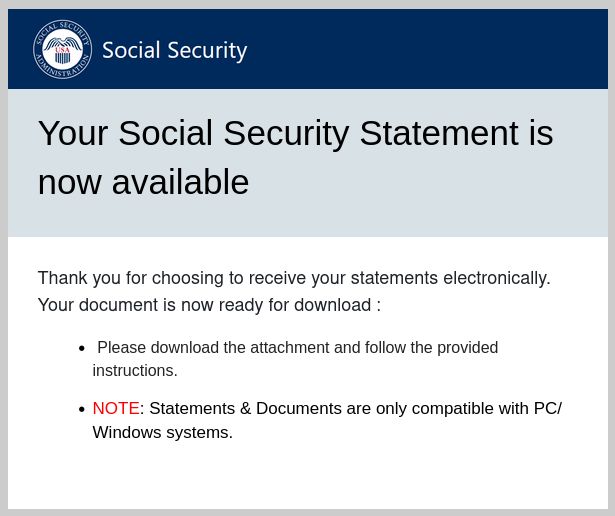
example SSA email

“Your Social Security Statement is now available
Thank you for choosing to receive your statements electronically.
Your document is now ready for download:

  • Please download the attachment and follow the provided instructions.
  • NOTE: Statements & Documents are only compatible with PC/Windows systems.”

There are some variations to this mail in circulation but the example above shows how legitimate these emails look.

The link in the email leads to the ScreenConnect support.Client.exe, but was found under several misleading names like ReceiptApirl2025Pdfc.exe, and SSAstatment11April.exe.

After cybercriminals install the client on the target’s computer, they remotely connect to it and immediately begin their malicious activities. They access and exfiltrate sensitive information such as banking details, personal identification numbers, and confidential files. This stolen data can then be used to commit identity theft, financial fraud, and other harmful acts. Experts have identified financial fraud as the primary objective of the Molatori group.

There are several circumstances that make this campaign hard to detect:

  • The cybercriminals send phishing emails from compromised WordPress sites, so the domains themselves appear legitimate and not malicious.
  • They often embed the email content as an image, which prevents email filters from effectively scanning and blocking the message.
  • ScreenConnect is a legitimate application which happens to be abused because of its capabilities.

What we can do

When receiving unsolicited emails there are a few necessary precautions you can take to avoid falling for phishing:

  • Verify the source of the email through independent sources.
  • Don’t click on links until you are sure they are non-malicous.
  • Don’t open downloaded files or attachments until you are sure they are safe.
  • Use an up-to-date and active anti-malware solution.
  • If you suspect an email isn’t legitimate, take a name or some text from the message and put it into a search engine to see if any known phishing attacks exist using the same methods.

Malwarebytes users are protected

Malwarebytes will detect suspicious instances of the ScreenConnect client as RiskWare.ConnectWise.CST.

Malwarebytes blocks RiskWare.ConnectWise.CST

And blocks connections to these associated domains:

  • atmolatori[.]icu
  • gomolatori[.]cyou
  • molatoriby[.]cyou
  • molatorier[.]cyou
  • molatorier[.]icu
  • molatoriist[.]cyou
  • molatorila[.]cyou
  • molatoriora[.]cyou
  • molatoriora[.]icu
  • molatoripro[.]cyou
  • molatoripro[.]icu
  • molatorisy[.]cyou
  • molatorisy[.]icu
  • onmolatori[.]icu
  • promolatori[.]icu
  • samolatori[.]cyou
  • samolatori[.]icu
  • umolatori[.]icu

We don’t just report on data privacy—we help you remove your personal information

Cybersecurity risks should never spread beyond a headline. With Malwarebytes Personal Data Remover, you can scan to find out which sites are exposing your personal information, and then delete that sensitive data from the internet.
read more

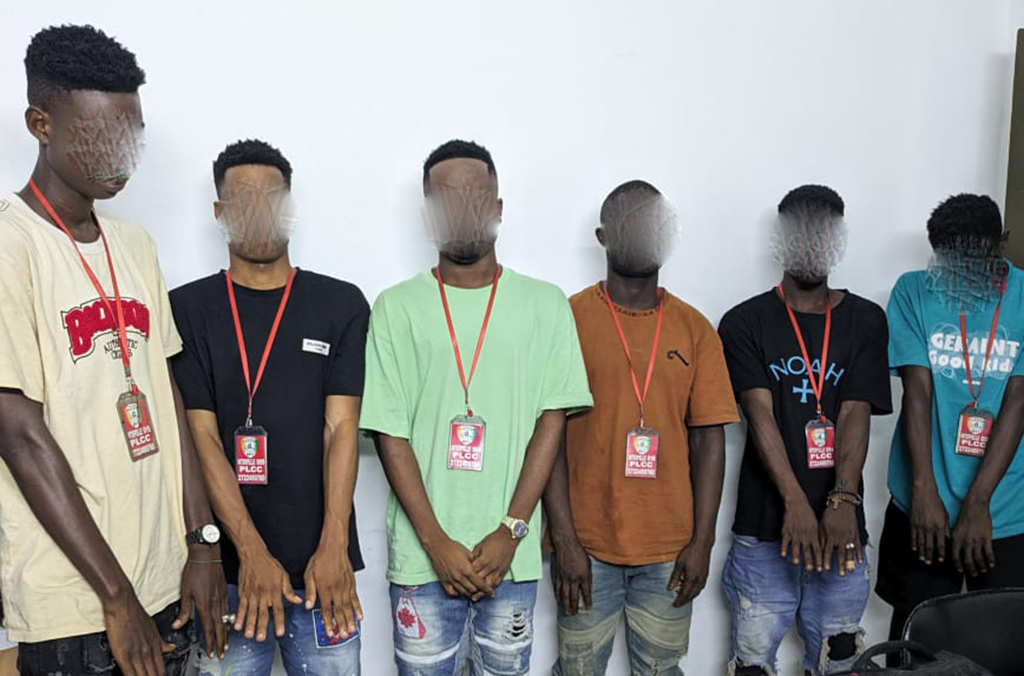
Arrests in international operation targeting cybercriminals in West Africa

Global law enforcement unites with INTERPOL to combat cybercrime

Arrests in international operation targeting cybercriminals in West Africa

Eight individuals have been arrested as part of an ongoing international crackdown on cybercrime, dealing a major blow to criminal operations in Côte d’Ivoire and Nigeria.

The arrests were made as part of INTERPOL’s Operation Contender 2.0, an initiative aimed at combating cyber-enabled crimes, primarily in West Africa, through enhanced international intelligence sharing.

Phishing scam targets Swiss citizens

In Côte d’Ivoire authorities dismantled a large-scale phishing scam, thanks to a collaborative effort with Swiss police and INTERPOL.

The scam, which resulted in reported financial losses of over USD 1.4 million, involved perpetrators who posed as buyers on small advertising websites. The fraudsters used QR codes to direct victims to fraudulent websites that mimicked a legitimate payment platform where victims would unwittingly enter personal information such as their log in details or card number. They also impersonated the platform’s customer service agents over the phone to further deceive victims.

Swiss authorities received over 260 reports regarding the scam between August 2023 and April 2024, which prompted an investigation that traced the suspects back to Côte d’Ivoire.

With coordination and intelligence from INTERPOL, the Ivorian Cyber Unit led the investigation, locating and arresting the main suspect, who confessed to the offence and to making financial gains of over USD 1.9 million.

The arrest also led to the seizure of digital devices, which are currently undergoing forensic analysis. Five other individuals were found to be conducting cybercriminal activities at the same location, increasing the scope of the operation.

The investigation is still ongoing, with Ivorian investigators working to identify additional victims, recover stolen funds, and trace goods purchased with illicit proceeds.


Arrests in international operation targeting cybercriminals in West Africa

Operation Contender 2.0 combats cybercrime through enhanced intelligence sharing

Arrests in international operation targeting cybercriminals in West Africa

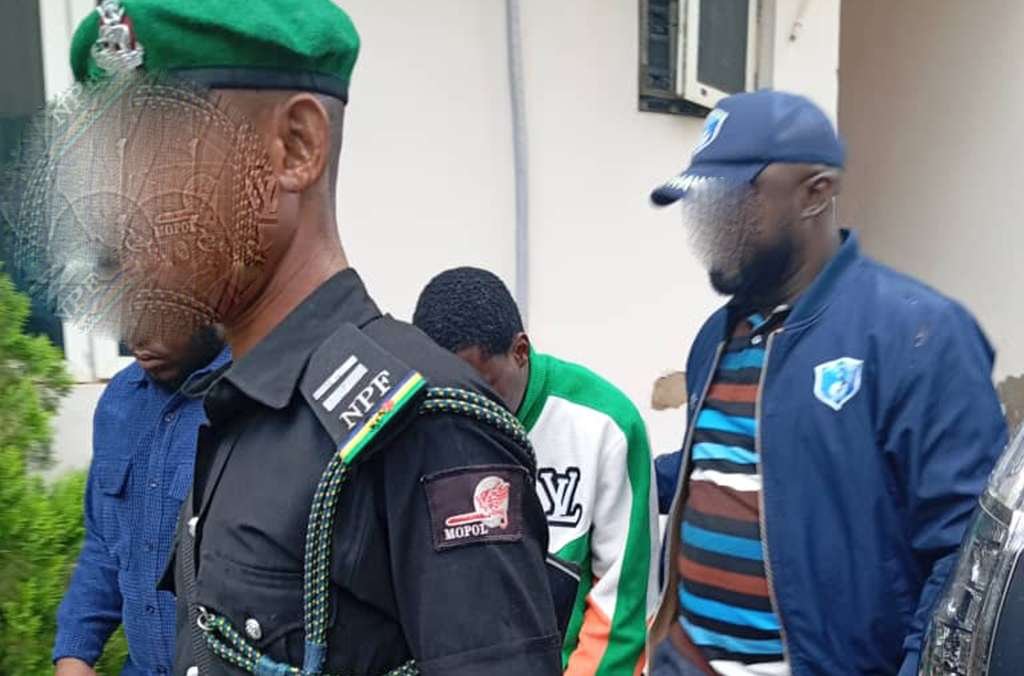
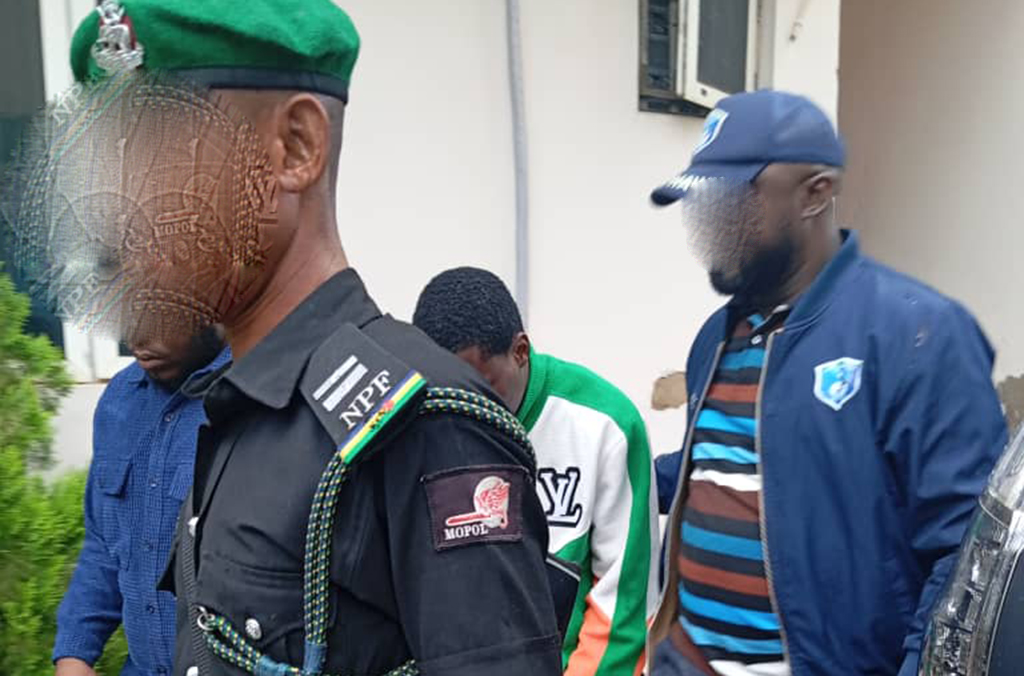
Arrests in Nigeria as part of a crackdown on cybercrime

Arrests in international operation targeting cybercriminals in West Africa

Global law enforcement united with INTERPOL for the operation

Arrests in international operation targeting cybercriminals in West Africa

The arrests led to the seizure of digital devices
4/4

An international campaign against romance cyber fraud

The Contender 2.0 operation is the latest wave of ongoing action coordinated by INTERPOL’s African Joint Operation against Cybercrime (AFJOC). The initiative was launched in 2021 in response to intelligence from authorities and private partners on the activities of cybercriminal syndicates operating within the African region, particularly in West Africa.

The project targets a variety of cyber threats, including business email compromise schemes, a type of phishing attack in which criminals exploit trust to deceive senior executives into transferring funds or divulging sensitive information.

Another key AFJOC objective is romance scams and other financial grooming crimes which often involve cryptocurrencies or other digital assets. Romance scams refer to criminals creating fake online identities to develop romantic or close relationships with their victims, ultimately to manipulate or steal money from them.

In one recent example, authorities in Finland alerted the Nigerian Police Force via INTERPOL that a victim had been scammed out of a substantial amount of money. Leveraging its private sector partners, including Trend Micro and Group-IB, INTERPOL’s AFJOC was able to provide detailed information to the Nigerian authorities. This intelligence was instrumental in guiding investigative efforts, and local police arrested the suspect on 27 April 2024, along with an accomplice. The investigation revealed the offender’s involvement in similar scams and uncovered links to other potential victims.

Neal Jetton, Director of the Cybercrime Directorate said:

“Leveraging the increased reliance on technology in every aspect of our daily lives, cybercriminals are employing a range of techniques to steal data and execute fraudulent activities. These recent successful collaborations, under the umbrella of Operation Contender 2.0, demonstrate the importance of continued international cooperation in combating cybercrime and bringing perpetrators to justice.”

The AFJOC project is funded by the UK’s Foreign, Commonwealth & Development Office.

read more
Trustpilot
The rating of livingsafeonline.com at Trustprofile Reviews is 9.1/10 based on 13 reviews.
Verified by MonsterInsights