
Gophish Framework Used in Phishing Campaigns to Deploy Remote Access Trojans

î „Ravie Lakshmanan

Russian-speaking users have become the target of a new phishing campaign that leverages an open-source phishing toolkit called Gophish Framework to deliver DarkCrystal RAT (aka DCRat) and a previously undocumented remote access trojan dubbed PowerRAT.

“The campaign involves modular infection chains that are either Maldoc or HTML-based infections and require the victim’s intervention to trigger the infection chain,” Cisco Talos researcher Chetan Raghuprasad said in a Tuesday analysis.

The targeting of Russian-speaking users is an assessment derived from the language used in the phishing emails, the lure content in the malicious documents, links masquerade as Yandex Disk (“disk-yandex[.]ru”), and HTML web pages disguised as VK, a social network predominantly used in the country.

Gophish refers to an open-source phishing framework that allows organizations to test their phishing defenses by leveraging easy-to-use templates and launch email-based campaigns that can then be tracked in near real-time.

The unknown threat actor behind the campaign has been observed taking advantage of the toolkit to send phishing messages to their targets and ultimately push DCRat or PowerRAT depending on the initial access vector used: A malicious Microsoft Word document or an HTML embedding JavaScript.

When the victim opens the maldoc and enables macros, a rogue Visual Basic (VB) macro is executed to extract an HTML application (HTA) file (“UserCache.ini.hta”) and a PowerShell loader (“UserCache.ini”).

The macro is responsible for configuring a Windows Registry key such that the HTA file is automatically launched every time a user logs into their account on the device.

The HTA file, for its part, drops a JavaScript file (“UserCacheHelper.lnk.js”) that’s responsible for executing the PowerShell Loader. The JavaScript is executed using a legitimate Windows binary named “cscript.exe.”

“The PowerShell loader script masquerading as the INI file contains base64 encoded data blob of the payload PowerRAT, which decodes and executes in the victim’s machine memory,” Raghuprasad said.

The malware, in addition to performing system reconnaissance, collects the drive serial number and connects to remote servers located in Russia (94.103.85[.]47 or 5.252.176[.]55) to receive further instructions.

“[PowerRAT] has the functionality of executing other PowerShell scripts or commands as directed by the [command-and-control] server, enabling the attack vector for further infections on the victim machine.”

In the event no response is received from the server, PowerRAT comes fitted with a feature that decodes and executes an embedded PowerShell script. None of the analyzed samples thus far have Base64-encoded strings in them, indicating that the malware is under active development.

The alternate infection chain that employs HTML files embedded with malicious JavaScript, in a similar vein, triggers a multi-step process that leads to the deployment of DCRat malware.

“When a victim clicks on the malicious link in the phishing email, a remotely located HTML file containing the malicious JavaScript opens in the victim machine’s browser and simultaneously executes the JavaScript,” Talos noted. “The JavaScript has a Base64-encoded data blob of a 7-Zip archive of a malicious SFX RAR executable.”

Present within the archive file (“vkmessenger.7z”) – which is downloaded via a technique called HTML smuggling – is another password-protected SFX RAR that contains the RAT payload.

It’s worth noting that the exact infection sequence was detailed by Netskope Threat Labs in connection with a campaign that leveraged fake HTML pages impersonating TrueConf and VK Messenger to deliver DCRat. Furthermore, the use of a nested self-extracting archive has been previously observed in campaigns delivering SparkRAT.

“The SFX RAR executable is packaged with the malicious loader or dropper executables, batch file, and a decoy document in some samples,” Raghuprasad said.

“The SFX RAR drops the GOLoader and the decoy document Excel spreadsheet in the victim machine user profile applications temporary folder and runs the GOLoader along with opening the decoy document.”

The Golang-based loader is also designed to retrieve the DCRat binary data stream from a remote location through a hard-coded URL that points to a now-removed GitHub repository and save it as “file.exe” in the desktop folder on the victim’s machine.

DCRat is a modular RAT that can steal sensitive data, capture screenshots and keystrokes, and provide remote control access to the compromised system and facilitate the download and execution of additional files.

“It establishes persistence on the victim machine by creating several Windows tasks to run at different intervals or during the Windows login process,” Talos said. “The RAT communicates to the C2 server through a URL hardcoded in the RAT configuration file […] and exfiltrates the sensitive data collected from the victim machine.”

The development comes as Cofense has warned of phishing campaigns that incorporate malicious content within virtual hard disk (VHD) files as a way to avoid detection by Secure Email Gateways (SEGs) and ultimately distribute Remcos RAT or XWorm.

“The threat actors send emails with .ZIP archive attachments containing virtual hard drive files or embedded links to downloads that contain a virtual hard drive file that can be mounted and browsed through by a victim,” security researcher Kahng An said. “From there, a victim can be misled into running a malicious payload.”
read more

Sophos Fortifies XDR Muscle With $859M Secureworks Purchase

Michael Novinson (MichaelNovinson)

Sophos plans to make the largest acquisition in its four-decade history, scooping up Secureworks for $859 million to turbocharge its threat intelligence, detection and response. Sophos Fortifies XDR Muscle

See Also: Webinar | Identity Crisis: How to Combat Session Hijacking and Credential Theft with MDR

The Oxford, U.K.-based platform security vendor will combine its managed detection and response services with Atlanta-based Secureworks’ XDR, SIEM and identity detection and response capabilities. The deal will enhance threat detection, response times and security posture for businesses worldwide, helping the combined company serve customers ranging from small businesses to large enterprises (see: Why Dell Is Once Again Eyeing the Sale of MSSP Secureworks).

“Secureworks offers an innovative, market-leading solution with their Taegis XDR platform,” Sophos CEO Joe Levy said in a statement. “Combined with our security solutions and industry leadership in MDR, we will strengthen our collective position in the market and provide better outcomes for organizations of all sizes globally.”

Why Sophos, Secureworks Are Better Together

Secureworks, founded in 1999, employed 1,516 people as of Feb. 2, and is publicly traded, with Dell having 97.4% of the total voting power. The deal is set to close in early 2025 and will pay Secureworks shareholders $8.50 per share, which is 28% higher than the firm’s average trading price over the past 90 days. Secureworks’ stock is down $0.10 – or 1.18% – to $8.37 per share in trading Monday morning.

Sophos will pay for Secureworks through a combination of debt financing and backing from private equity firm Thoma Bravo, which acquired the company for $3.9 billion in March 2020. This is the largest of the 18 acquisitions Sophos has made since its founding in 1985, dwarfing the company’s $120 million purchase of endpoint security startup Invincea in February 2017 (see: Cybersecurity for SMBs: Joe Levy’s Take on Risk Mitigation).

“Sophos’ portfolio of leading endpoint, cloud and network security solutions – in combination with our XDR-powered managed detection and response – is exactly what organizations are looking for to strengthen their security posture and collectively turn the tide against the adversary,” Secureworks CEO Wendy Thomas said in a statement.

Sophos plans to integrate Secureworks’ capabilities around ITDR, SIEM, OT security and vulnerability risk prioritization into its broader suite of tools. The fusion will help customers detect, investigate and respond to threats more quickly, according to Sophos. The synergy between Sophos’ end-to-end products and Secureworks’ managed services expertise will further strengthen their offering, according to Sophos.

Secureworks and Sophos currently cater to different types of customers, and the firm said combining their technologies and services will make advanced security more accessible to smaller organizations while also benefiting large enterprises. This deal will also accelerate the use of AI, aiming for faster detection times and enhanced security visibility across both native and third-party tools, Sophos said.

Why Secureworks Was Seeking a Suitor

Both organizations work with channel partners, and Sophos said the acquisition is expected to create more value for these partners by offering them enhanced capabilities and a broader set of solutions to sell and support. Virtually all of Sophos’ business goes through channel partners, while Secureworks generated 23% of its revenue last year through referral agents, VARs, trade associations and MSSPs.

Secureworks has faced challenges in recent years, including declining revenue and layoffs. Despite growing adoption of its Taegis XDR platform, the company has reduced in its workforce as its stock value has fallen. This proposed acquisition by Sophos comes as Secureworks has been working to streamline its business and focus on high-growth areas including XDR.

Specifically, Secureworks’ sales for the fiscal year ended Feb. 2, 2024, fell to $365.9 million, down 21.1% from $463.5 million the prior year. And the size of Secureworks’ staff has fallen by nearly 44%, with headcount plummeting from 2,696 employees on Jan. 29, 2021, to just 1,516 workers on Feb. 2, 2024. Secureworks’ stock is down nearly 70% from its all-time high of $25.98 per share in September 2021.

Forrester didn’t include Secureworks in its 11-vendor evaluation of the XDR market in June of this year. Sophos, meanwhile, was the eighth highest-rated vendor, ahead of Trellix, Broadcom and Fortinet. Forrester praised Sophos for integrating native tools and third-party data from Google and Microsoft, but said the security analyst experience falls short, with little contextualization and cumbersome management.

Dell has been exploring options to sell off non-core assets like Secureworks as part of its strategy to focus on its core businesses. Dell in September 2020 sold encryption titan RSA Security to private equity firm Symphony Technology Group for $2.08 billion. Dell first teamed up with Morgan Stanley to explore a sale of Secureworks in 2019 when the stock was trading at a then-record high.

read more

Microsoft Reveals macOS Vulnerability that Bypasses Privacy Controls in Safari Browser

î „Ravie Lakshmanan

Microsoft Reveals macOS Vulnerability

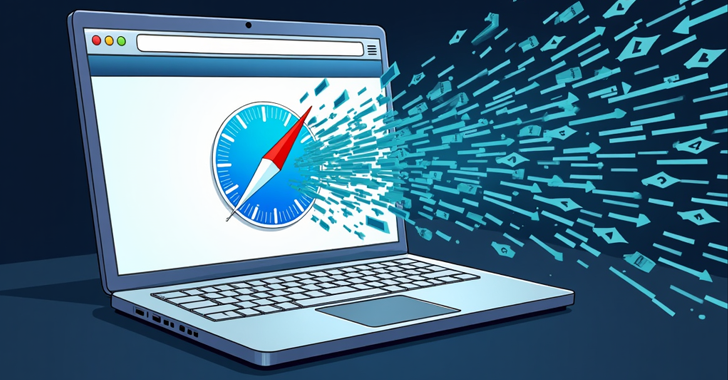
Microsoft has disclosed details about a now-patched security flaw in Apple’s Transparency, Consent, and Control (TCC) framework in macOS that has likely come under exploitation to get around a user’s privacy preferences and access data.

The shortcoming, codenamed HM Surf by the tech giant, is tracked as CVE-2024-44133. It was addressed by Apple as part of macOS Sequoia 15 by removing the vulnerable code.

HM Surf “involves removing the TCC protection for the Safari browser directory and modifying a configuration file in the said directory to gain access to the user’s data, including browsed pages, the device’s camera, microphone, and location, without the user’s consent,” Jonathan Bar Or of the Microsoft Threat Intelligence team said.

Microsoft said the new protections are limited to Apple’s Safari browser, and that it’s working with other major browser vendors to further explore the benefits of hardening local configuration files.

Microsoft Reveals macOS Vulnerability

HM Surf follows Microsoft’s discovery of Apple macOS flaws like Shrootless, powerdir, Achilles, and Migraine that could enable malicious actors to sidestep security enforcements.

While TCC is a security framework that prevents apps from accessing users’ personal information without their consent, the newly discovered bug could enable attackers to bypass this requirement and gain access to location services, address book, camera, microphone, downloads directory, and others in an unauthorized manner.

The access is governed by a set of entitlements, with Apple’s own apps like Safari having the ability to completely sidestep TCC using the “com.apple.private.tcc.allow” entitlement.

While this allows Safari to freely access sensitive permissions, it also incorporates a new security mechanism called Hardened Runtime that makes it challenging to execute arbitrary code in the context of the web browser.

That said, when users visit a website that requests location or camera access for the first time, Safari prompts for access via a TCC-like popup. These entitlements are stored on a per-website basis within various files located in the “~/Library/Safari” directory.

The HM Surf exploit devised by Microsoft hinges on performing the following steps –

  • Changing the home directory of the current user with the dscl utility, a step that does not require TCC access in macOS Sonoma
  • Modifying the sensitive files (e.g., PerSitePreferences.db) within “~/Library/Safari” under the user’s real home directory
  • Changing the home directory back to the original directory causes Safari to use the modified files
  • Launching Safari to open a web page that takes a snapshot via the device’s camera and grab the location

The attack could be extended further to save an entire camera stream or stealthily capture audio through the Mac’s microphone, Microsoft said. Third-party web browsers don’t suffer from this problem as they do not have the same private entitlements as Apple applications.

Microsoft noted it observed suspicious activity associated with a known macOS adware threat named AdLoad likely exploiting the vulnerability, making it imperative that users take steps to apply the latest updates.

“Since we weren’t able to observe the steps taken leading to the activity, we can’t fully determine if the AdLoad campaign is exploiting the HM surf vulnerability itself,” Bar Or said. “Attackers using a similar method to deploy a prevalent threat raises the importance of having protection against attacks using this technique.”

read more

North Korean IT Workers in Western Firms Now Demanding Ransom for Stolen Data

î „Ravie Lakshmanan

North Korean information technology (IT) workers who obtain employment under false identities in Western companies are not only stealing intellectual property, but are also stepping up by demanding ransoms in order to not leak it, marking a new twist to their financially motivated attacks.

“In some instances, fraudulent workers demanded ransom payments from their former employers after gaining insider access, a tactic not observed in earlier schemes,” Secureworks Counter Threat Unit (CTU) said in an analysis published this week. “In one case, a contractor exfiltrated proprietary data almost immediately after starting employment in mid-2024.”

The activity, the cybersecurity company added, shares similarities with a threat group it tracks as Nickel Tapestry, which is also known as Famous Chollima and UNC5267.

The fraudulent IT worker scheme, orchestrated with the intent to advance North Korea’s strategic and financial interests, refers to an insider threat operation that entails infiltrating companies in the West for illicit revenue generation for the sanctions-hit nation.

These North Korean workers are typically sent to countries like China and Russia, from where they pose as freelancers looking for potential job opportunities. As another option, they have also been found to steal the identities of legitimate individuals residing in the U.S. to achieve the same goals.

They are also known to request for changes to delivery addresses for company-issued laptops, often rerouting them to intermediaries at laptop farms, who are compensated for their efforts by foreign-based facilitators and are responsible for installing remote desktop software that allow the North Korean actors to connect to the computers.

What’s more, multiple contractors could end up getting hired by the same company, or, alternatively, one individual could assume several personas.

Secureworks said it has also observed cases where the fake contractors sought permission to use their own personal laptops and even caused organizations to cancel the laptop shipment entirely because they changed the delivery address while it was in transit.

Ransom for Stolen Data

“This behavior aligns with Nickel Tapestry tradecraft of attempting to avoid corporate laptops, potentially eliminating the need for an in-country facilitator and limiting access to forensic evidence,” it said. “This tactic allows the contractors to use their personal laptops to remotely access the organization’s network.”

In a sign that the threat actors are evolving and taking their activities to the next level, evidence has come to light demonstrating how a contractor whose employment was terminated by an unnamed company for poor performance resorted to sending extortion emails including ZIP attachments containing proof of stolen data.

“This shift significantly changes the risk profile associated with inadvertently hiring North Korean IT workers,” Rafe Pilling, Director of Threat Intelligence at Secureworks CTU, said in a statement. “No longer are they just after a steady paycheck, they are looking for higher sums, more quickly, through data theft and extortion, from inside the company defenses.”

To tackle the threat, organizations have been urged to be vigilant during the recruitment process, including conducting thorough identity checks, performing in-person or video interviews, and be on the lookout for attempts to re-route corporate IT equipment sent to the contractors declared home address, routing paychecks to money transfer services, and accessing the corporate network with unauthorized remote access tools.

“This escalation and the behaviors listed in the FBI alert demonstrate the calculated nature of these schemes,” Secureworks CTU said, pointing out the workers’ suspicious financial behavior and their attempts to avoid enabling video during calls.

“The emergence of ransom demands marks a notable departure from prior Nickel Tapestry schemes. However, the activity observed prior to the extortion aligns with previous schemes involving North Korean workers.”

read more

Feds unmask duo running one of the most prolific hacker gangs

The Department of Justice has charged and arrested two Sudanese brothers with operating Anonymous Sudan, a hacker group known for destructive website takedowns.

Why it matters: The indictment, unsealed Wednesday, paints the clearest picture of who was running the mysterious Anonymous Sudan hacking group — which has launched more than 35,000 attacks in the last year against hospitals, government offices and other major organizations.

Driving the news: A grand jury indicted Ahmed Salah Yousif Omer and Alaa Salah Yusuuf Omer with a count of conspiracy to damage protected computers.

  • Ahmed Omer was also charged with three counts of damaging protected computers.
  • The FBI and the U.S. Attorney’s Office for the Central District of California seized Anonymous Sudan’s hacking tool, according to a press release.
  • The Washington Post reported that officials arrested the duo abroad in March.

Threat level: Anonymous Sudan’s attacks have caused more than $10 million in damage to U.S. organizations, according to federal officials.

  • Anonymous Sudan’s victim list spans sectors and includes several high-profile names: Cloudflare, Microsoft, OpenAI and even the FBI itself.
  • Cedars-Sinai Medical Center in Los Angeles had to redirect emergency room patients to other hospitals for treatment.

The big picture: Anonymous Sudan has been a mystery to security researchers for a little more than a year.

  • The group is mostly politically motivated, unlike other cybercriminal groups where money is the prime motivator.
  • But the group has been far more prolific than the typical political hacking group. At times, security researchers had even assumed the group was a front for pro-Russia political hackers.
  • However, officials told the Post they don’t believe a third party, including a government, was financing or supporting the group’s work.

What they’re saying: “What’s unusual is the predominance of the ideological motive, with financial sprinkled in,” Martin Estrada, U.S. attorney for the Los Angeles region, told the Post.

How it works: Anonymous Sudan targeted victims in distributed denial-of-service attacks — where hackers overload internet-enabled devices with bot traffic until they’re inaccessible.

  • While suffering a website outage might not sound too bad, the repercussions can be huge. Customers may not be able to make payments online and corporations may not be able to access cloud servers.
  • Anonymous Sudan would demand victims pay a ransom to make the attack end, according to court filings.
  • Some of these victims sustained millions of dollars in losses from these attacks, according to a criminal complaint unsealed Wednesday.

Between the lines: Anonymous Sudan was also selling its tool to other hacking groups looking to launch their own large-scale DDoS attacks, according to the complaint.

  • More than 100 users have used the tool — known as Godzilla Botnet, Skynet Botnet and InfraShutdown — to deploy their own DDoS attacks, per federal officials.
  • This is also unusual: Building and selling hacker tools is more common in the cybercrime world and rarely seen in the political hacking space.

Zoom in: The private sector played a prominent role in helping the FBI identify the people running this group.

  • PayPal’s own internal investigation after its attack uncovered certain accounts tied to Anonymous Sudan, according to the complaint.
  • Those accounts then helped the FBI identify potential email addresses linked to Ahmed Omer, specifically, according to the affidavit.

What’s next: If convicted, Ahmed Omer could face a maximum sentence of life in prison, while Alaa Omer could face a maximum of five years.

read more

Hacker allegedly behind attacks on FBI, Airbus, National Public Data arrested in Brazil

Jonathan Greig

Federal law enforcement in Brazil arrested a hacker allegedly behind several brazen, high-profile cyberattacks.

In a statement on Wednesday, Brazil’s Department of Federal Police (DFP)said they launched “Operation Data Breach” to investigate several intrusions on their own systems as well as others internationally.

“A search and seizure warrant and a preventive arrest warrant was served in the city of Belo Horizonte/MG against an investigated person suspected of being responsible for two publications and sales of Federal Police data, on May 22, 2020 and on February 22, 2022,” DFP said.

“The prisoner boasted of being responsible for several cyber intrusions carried out in some countries, claiming, on websites, to have disclosed sensitive data of 80,000 members of InfraGard, a partnership between the FBI and private critical infrastructure entities in the United States of America.”

DFP did not name the suspect, but a threat actor known as USDoD has long boasted of being behind the December 2022 breach of the FBI’s InfraGard platform that is used by law enforcement to coordinate with companies.

The hacker — who has been linked to Brazil by several cybersecurity researchers — also claimed breaches of European aerospace giant Airbus, the U.S. Environmental Protection Agency and several other organizations that often could not be verified.

The same threat actor caused widespread alarm in April when they posted a database on the criminal marketplace Breached claiming it came from U.S. background check giant National Public Data. The database included about 899 million unique Social Security numbers, likely of both living and deceased people.

A bankruptcy filing by National Public Data explicitly names USDoD, noting that the hacker “has had a great deal of success breaching other institutions including the FBI, Airbus, and TransUnion.”

DFP confirmed that the person they arrested is “responsible for leaking large databases of personal information, including those of companies such as Airbus and the United States Environmental Protection Agency.”

“The person under investigation must answer for the crime of hacking into a computer device, qualified by obtaining information, with an increase in the sentence for the commercialization of the data obtained,” they said.

“The investigation will continue to identify any other cyber intrusions that were committed by the person under investigation.”

A person claiming to be USDoD came forward in August and spoke to a news outlet, admitting to being a 33-year-old man named Luan G. from the state of Minas Gerais in Brazil.

“I want to say thank you, it is time to admit I got defeated and I will retire my Jersey. Yes, this is Luan speaking. I won’t run, I’m in Brazil, the same city where I was born,” he told HackRead.

“I am a huge valuable target and maybe I will talk soon to whoever is in charge but everyone will know that behind USDoD I’m a human like everyone else, to be honest, I wanted this to happen, I can’t live with multiple lives and it is time to take responsibility for every action of mine and pay the price doesn’t matter how much it may cost me.”

The person claimed they had already been identified by cybersecurity experts working for Crowdstrike and other companies like Intel471. Local news outlets reported at the time that Crowdstrike shared its findings with the Brazilian government.

Other researchers have used social media accounts and more to trace the identity back to Luan.

The arrest is just the latest attempt by Brazilian law enforcement to limit the operations of hackers in their country. In January, Brazilian police disrupted the operation of a criminal group responsible for the banking malware called Grandoreiro that was used to steal €3.6 million ($3.9 million) since 2019.

In 2022, they carried out eight search and seizure warrants as part of an investigation into attacks claimed by the Lapsus$ Group.

read more

Undercover North Korean IT workers now steal data, extort employers

By

North Korean IT professionals who trick Western companies into hiring them are stealing data from the organization’s network and asking for a ransom to not leak it.

Dispatching IT workers to seek employment at companies in wealthier nations is a tactic that North Korea has been using for years as a means to obtain privileged access for cyberattacks or to generate revenue for the country’s weapons programs.

Researchers at cybersecurity company Secureworks uncovered the extortion component during multiple investigations of such fraudulent schemes.

After the employment of a North Korean national with access to proprietary data (as part of their contractor role) terminated, the company would receive the first extortion email, the researchers explain.

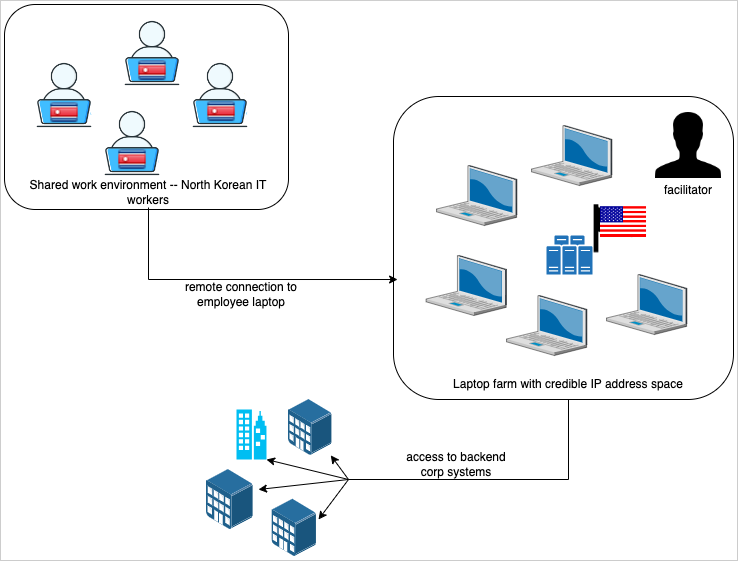
To obtain the job and avoid raising suspicions afterwards, the fraudulent IT workers used a false or stolen identity and relied on laptop farms to route traffic between their real location and the company through a U.S.-based point.

They also avoided video during calls or resorted to various tricks while on the job to hide their face during video conferences, such as using artificial intelligence tools.

Overview of the scheme
Source: Secureworks

In July, American cybersecurity company KnowBe4 revealed that they were among the hundreds of victimized companies, and in their case, the threat actor attempted to install an infostealer on the company’s computer.

Secureworks tracks the group organizing and coordinating North Korea’s IT worker army as “Nickel Tapestry,” while Mandiant uses the UNC5267 name.

One example of a Nickel Tapestry campaign in mid-2024 that Secureworks investigated is that of a company that had proprietary data stolen almost immediately after employing an external contractor

The data was transferred to a personal Google Drive cloud storage using the company’s virtual desktop infrastructure (VDI).

After terminating the employment due to poor performance, the company began receiving extortion emails from external Outlook and Gmail addresses containing samples of the stolen data in ZIP archives.

The threat actors demanded a six-figure ransom to be paid in cryptocurrency in exchange to not leaking the data publicly.

Secureworks’ investigation revealed that Nickel Tapestry had used Astrill VPN and residential proxies to mask their real IP address during the malicious activities, while AnyDesk was used for remote accessing the systems.

The researchers warn that North Korean IT workers often coordinate to refer one another to companies.

Organizations should be cautious when hiring remote workers or freelancers, and look for signs of fraud like changes in payment accounts and laptop shipment addresses, submission of generic-looking resumes, atypical correspondence hours, and unwillingness to enable camera during interviews.

read more

Windows Downdate tool lets you ‘unpatch’ Windows systems

By

SafeBreach security researcher Alon Leviev has released his Windows Downdate tool, which can be used for downgrade attacks that reintroduce old vulnerabilities in up-to-date Windows 10, Windows 11, and Windows Server systems.

In such attacks, threat actors force up-to-date targeted devices to revert to older software versions, thus reintroducing security vulnerabilities that can be exploited to compromise the system.

Windows Downdate is available as an open-source Python-based program and a pre-compiled Windows executable that can help downgrade Windows 10, Windows 11, and Windows Server system components.

Leviev has also shared multiple usage examples that allow downgrading the Hyper-V hypervisor (to a two-year-old version), Windows Kernel, the NTFS driver, and the Filter Manager driver (to their base versions), and other Windows components and previously applied security patches.

“You can use it to take over Windows Updates to downgrade and expose past vulnerabilities sourced in DLLs, drivers, the NT kernel, the Secure Kernel, the Hypervisor, IUM trustlets and more,” SafeBreach security researcher Alon Leviev explained.

“Other than custom downgrades, Windows Downdate provides easy to use usage examples of reverting patches for CVE-2021-27090, CVE-2022-34709, CVE-2023-21768 and PPLFault, as well as examples for downgrading the hypervisor, the kernel, and bypassing VBS’s UEFI locks.”

Leviev-Windows-Downdate-tweet

As Leviev said at Black Hat 2024 when he disclosed the Windows Downdate downgrade attack—which exploits the CVE-2024-21302 and CVE-2024-38202 vulnerabilities—using this tool is undetectable because it cannot be blocked by endpoint detection and response (EDR) solutions and Windows Update keeps reporting that the targeted system is up-to-date (despite being downgraded).

“I discovered multiple ways to disable Windows virtualization-based security (VBS), including its features such as Credential Guard and Hypervisor-Protected Code integrity (HVCI), even when enforced with UEFI locks. To my knowledge, this is the first time VBS’s UEFI locks have been bypassed without physical access,” Leviev said.

“As a result, I was able to make a fully patched Windows machine susceptible to thousands of past vulnerabilities, turning fixed vulnerabilities into zero-days and making the term “fully patched” meaningless on any Windows machine in the world.”

While Microsoft released a security update (KB5041773) to fix the CVE-2024-21302 Windows Secure Kernel Mode privilege escalation flaw on August 7, the company has yet to provide a patch for CVE-2024-38202, a Windows Update Stack elevation of privilege vulnerability.

Until a security update is released, Redmond advises customers to implement recommendations shared in the security advisory published earlier this month to help protect against Windows Downdate downgrade attacks.

Mitigation measures for this issue include configuring “Audit Object Access” settings to monitor file access attempts, restricting update and restore operations, using Access Control Lists to limit file access, and auditing privileges to identify attempts to exploit this vulnerability.

read more

Things a cybersecurity expert says they would never do

The rise of cyberattacks has become a growing concern in recent years as the threat of data breaches, ransomware and other malicious online activities has plagued organizations and digital users.

How can you protect your personal information and privacy? CTVNews.ca spoke to a cybersecurity expert on how to better safeguard against the evolving landscape of cyber threats.

Don’t: Reuse passwords

Use a unique password for each of your accounts, “especially for sites where you know a cyber criminal getting access to that information would potentially do some damage,” said Sam Andrey, managing director at The Dais, a Toronto Metropolitan University think tank focused on tech policy.

Sensitive materials include your email address, banking information, and personal files, he added.

Andrey said using a unique password for every account may feel unrealistic in a world where users have so many passwords, but password managers exist for that reason.

A password manager is a tech tool that helps users create, save and manage passwords across different online services, including web applications, online shops and social media. It makes it easier to keep track of passwords, as only one master password is needed, Andrey said.

Don’t: Skip two-factor authentication setup

Andrey said two-factor authentication is one of the “best measures” available to protect against breaches to your accounts.

With a two-factor authentication (2FA) setup, a user is granted access to an application after successfully presenting two forms of identification.

This adds an extra layer of security to your account in the event it is compromised or vulnerable to malicious activity.

Don’t: Skip software updates

“It’s very easy to click on ‘Oh I’ll do that tomorrow’ or ‘I’ll do that next time,'” Andrey said.

“It’s actually more important to do [software updates] these days than it is to buy some expensive antivirus software, [keeping updated] Windows Defender and other kinds of operating systems,” Andrey explained.

“Those patches and security updates fix the latest bugs and vulnerabilities that cybercriminals are taking advantage of and those things are always evolving,” he said.

Don’t: Use non-encrypted platforms

Andrey advised users to look for the lock symbol at the top of their browsers.

Encrypted platforms allow users to protect their information by entering it into a form that can only be read by the user who has permission to do so.

Gmail and most email programs are now encrypted by default, Andrey said.

Andrey said some messaging services, including Apple’s iMessage and WhatsApp, are encrypted end to end—not even the software or provider can view the messages.

For online shopping, Andrey said users should ensure they are using a secure website before entering banking or personal information.

Do: Use a VPN when travelling

For people who travel and use public Wi-Fi networks on subways or airports in other jurisdictions around the world, Andrey recommends buying a VPN to secure your connection when you’re away from home.

A VPN, or “virtual private network,” is a digital tool that encrypts your internet traffic and hides your identity online. There are plenty of options available to download with varying prices and features.

Do: Be wary of scams

Don’t provide login information by phone, [or] by text. Anytime anybody’s prompting you to do that, it’s almost for sure a scam,” Andrey said. “Don’t provide sensitive information.”

Andrey said it’s increasingly rare for companies to text links and users should verify the site they are entering information into to ensure legitimacy.

Check display names and emails to verify if they are correct or from the person you are expecting.

Do: Check default settings

“A lot of the times you’re prompted to opt into things that you don’t need. If you don’t need Google holding your search history for more than six months, have them auto delete it,” Andrey said.

Andrey said the same thing goes for personalized ads or location sharing. “Turn those things off because it just stores more data that is vulnerable to being misused,” Andrey explained.

For sites you visit for the first time—and have no intention of coming back—be careful about what information you provide them. Most want location, cookies and to track you across the internet, reject some of those things, Andrey said.

read more
Trustpilot
The rating of livingsafeonline.com at Trustprofile Reviews is 9.1/10 based on 13 reviews.
Verified by MonsterInsights